
SaltforSewing
The needle represents the beginning of learning.
The thread represents the path that follows.
The growing leaves suggest development, opportunity, and the ability to build a more independent future.
A skill can grow into independence.


A handicraft project initiated in Switzerland and materialized in Yemen. It trains women who have no access to formal education in sewing, so they can build a small enterprise and an income for their families and themselves.
It came into existence because of a mistake, or better: a misunderstanding.
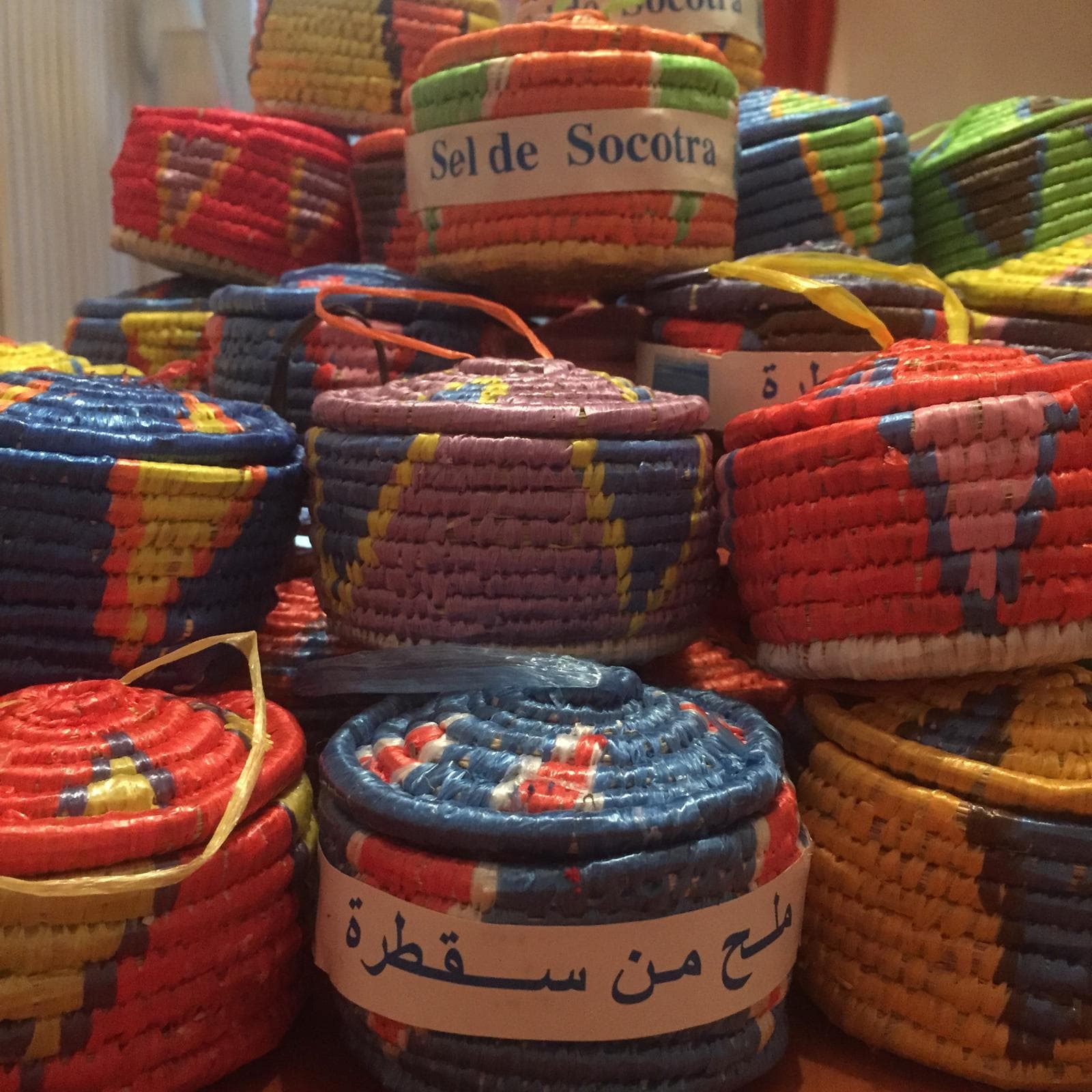
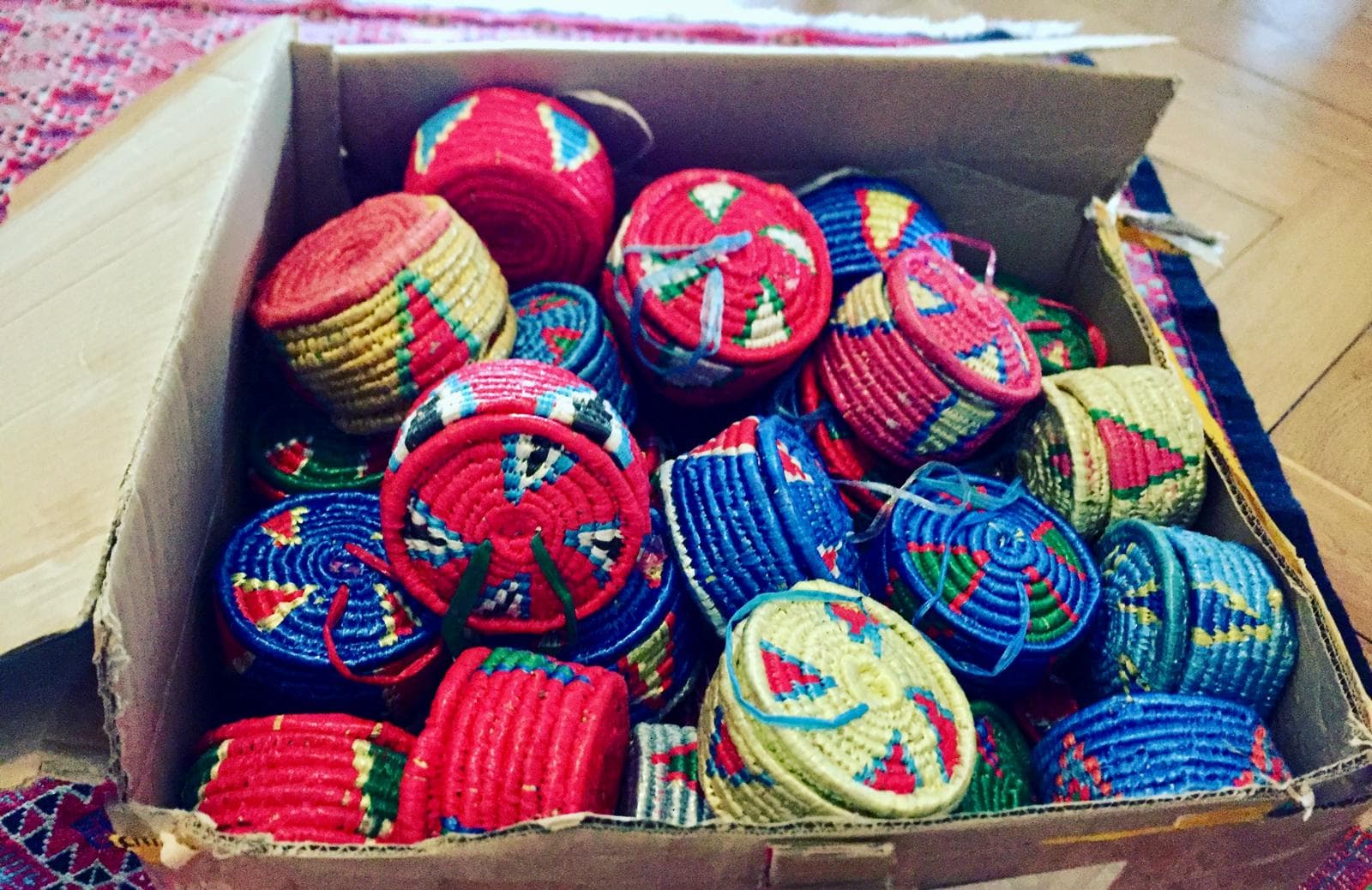
In 2015, shortly after the war broke out, Helene Aecherli ordered handmade salt baskets from her friend Jamil’s stall at a Christmas market in Zürich. They were woven by his sister Boshra and her friends in Ibb. Instead of selling them back, she sold them for 15 Swiss francs each, and asked the women what their village needed most. The answer: sewing machines, textiles, and the salary for a teacher.
Read how it started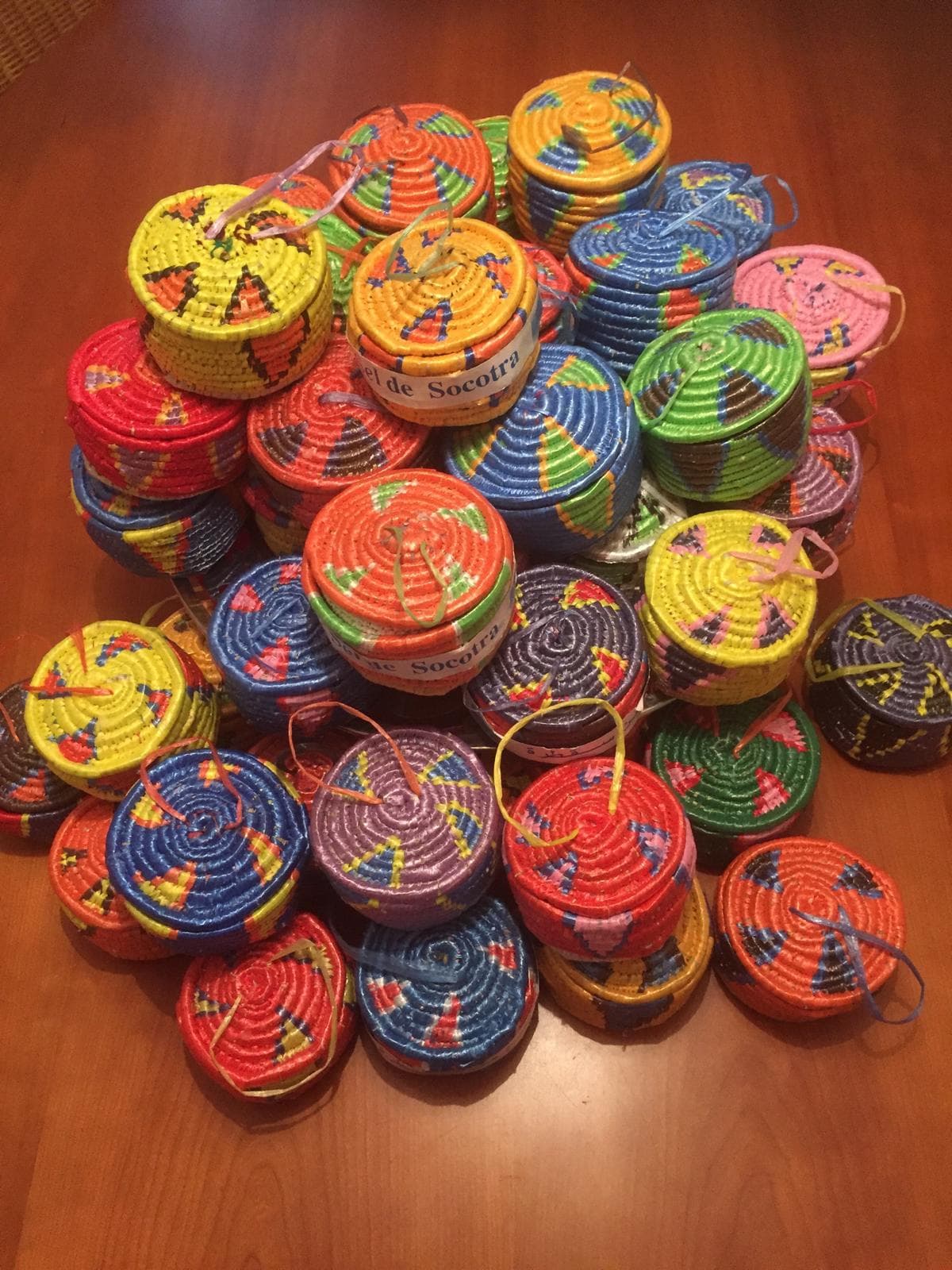
- Yemenby UN plane
- Djiboutithen delivered
- Parisand finally
- Zürichfor years, the baskets found their way



It is all about the art and craft of sewing, and sewing being the grain of salt in the lives of so many Yemeni women.
From “Salt for Sewing Machines” (2015) to “Salt 4 Sewing” (Sana’a, today)
From a misunderstanding in Zürich to a classroom in Sana’a.
- 2015
A stall at a Christmas market in Zürich
Jamil, a businessman from Sana’a, sells Yemeni lamps, jewelry, shawls and small handmade baskets filled with fleur de sel.
- 15 → 50
A huge package
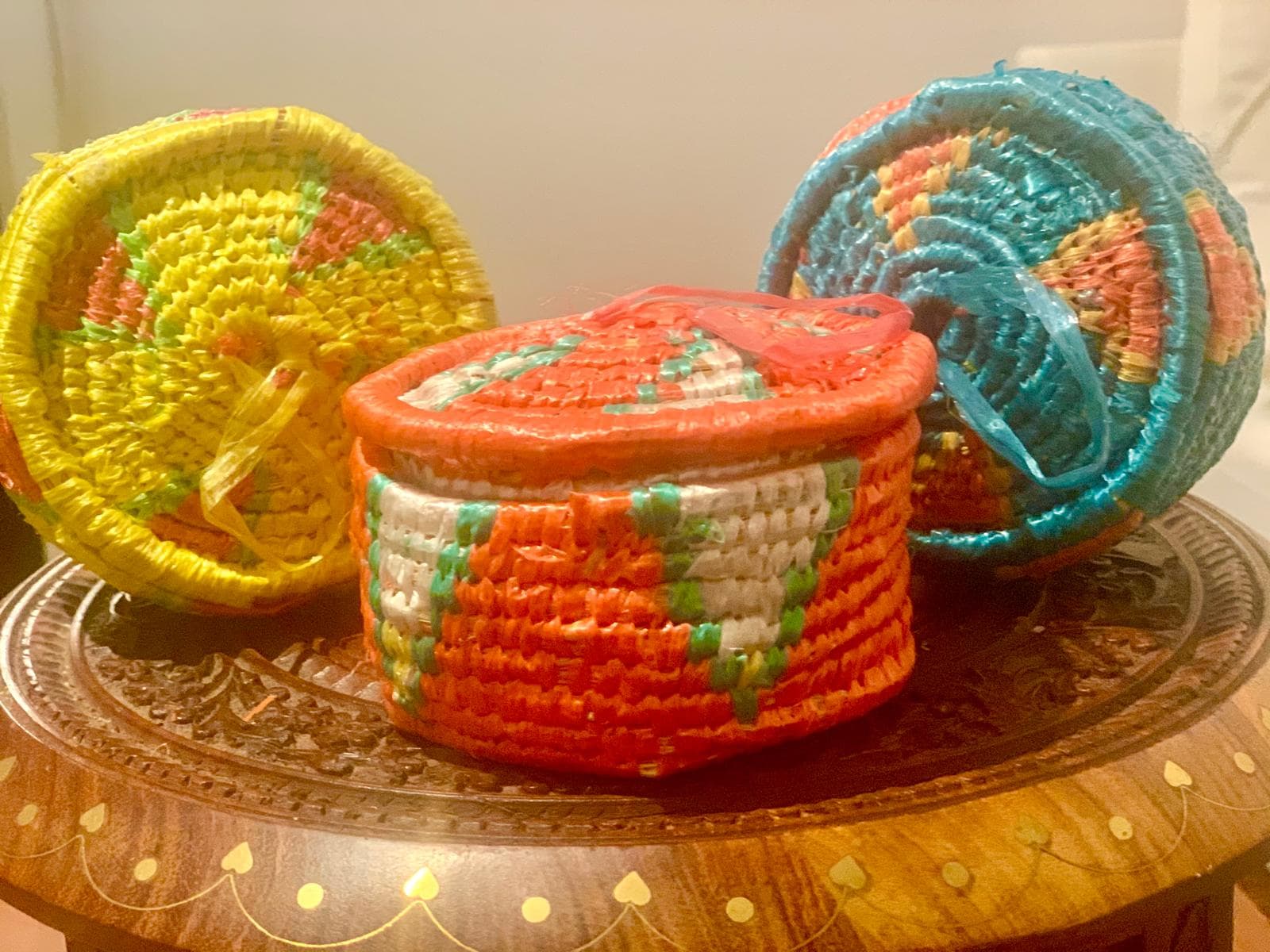
Helene orders 15 baskets as gifts. She receives 50, neatly wrapped, and about three kilos of salt. She sells them for 15 Swiss francs each.
- Ibb
Salt for Sewing Machines
The money pays for sewing and embroidery machines, textiles and a teacher’s salary in Boshra’s village. Women go on to sew dresses for the local orphanage and repair clothes for neighbours.
- A halt
Tokens of an end, or symbols of a restart?
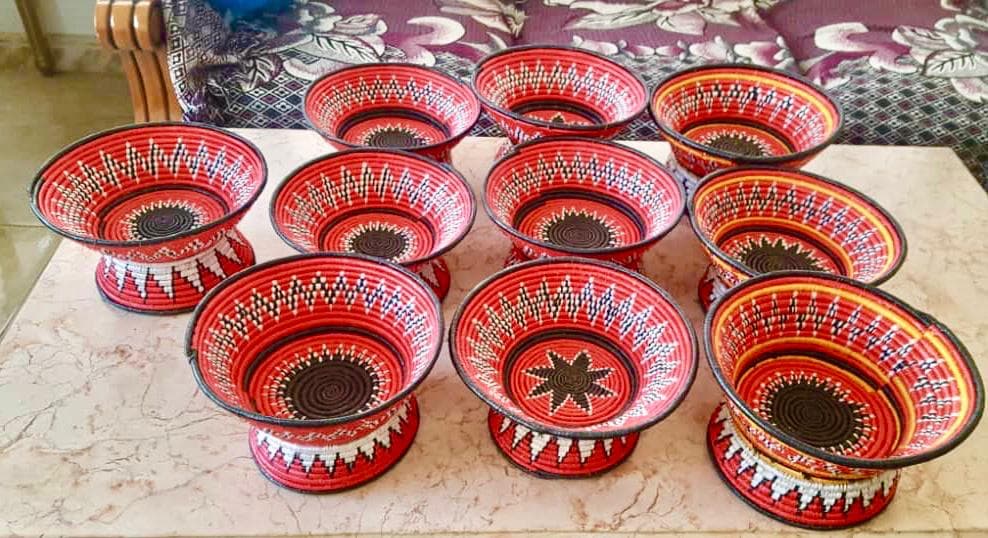
The project fades out. What remains: 50 baskets, 3 fruit bowls, 10 make-up bags and some salt.
- Sana’a
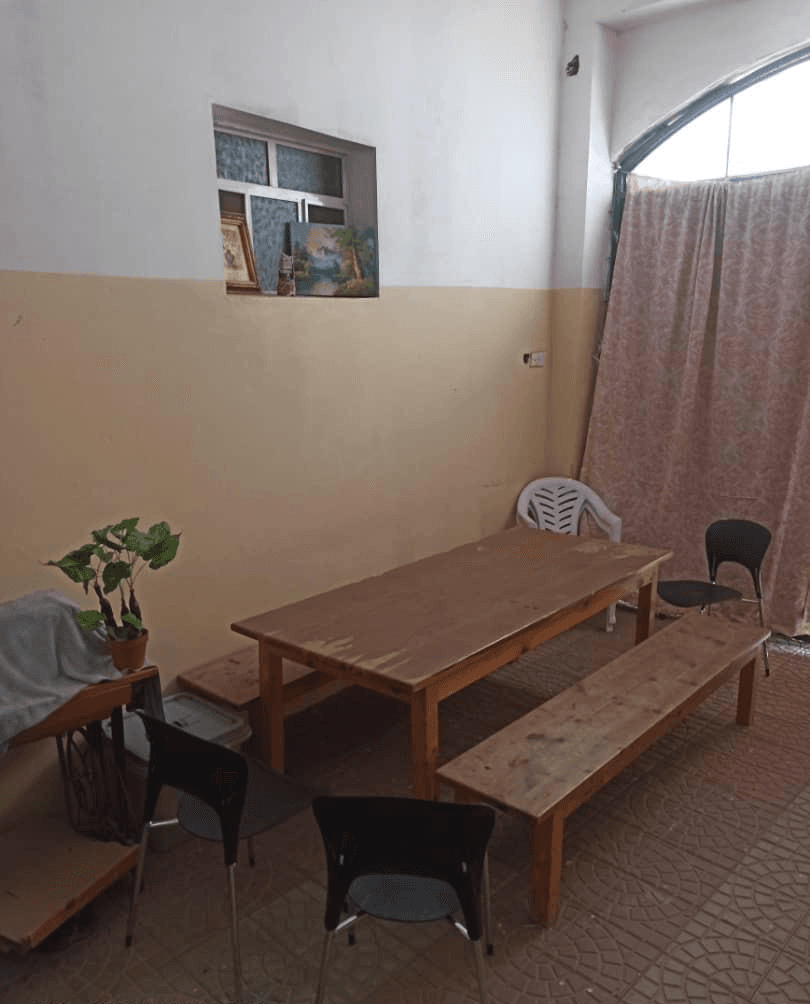
A garage becomes a classroom
Shyma’a restarts the project, hires Halima and Jamila, and turns the garage of her house into a classroom. The name becomes Salt 4 Sewing.
- Today
A project that is thriving
A new six-week class of around 17 women, most of them beginners. Soon there will be new dresses in the making, and with them perhaps also new stories.
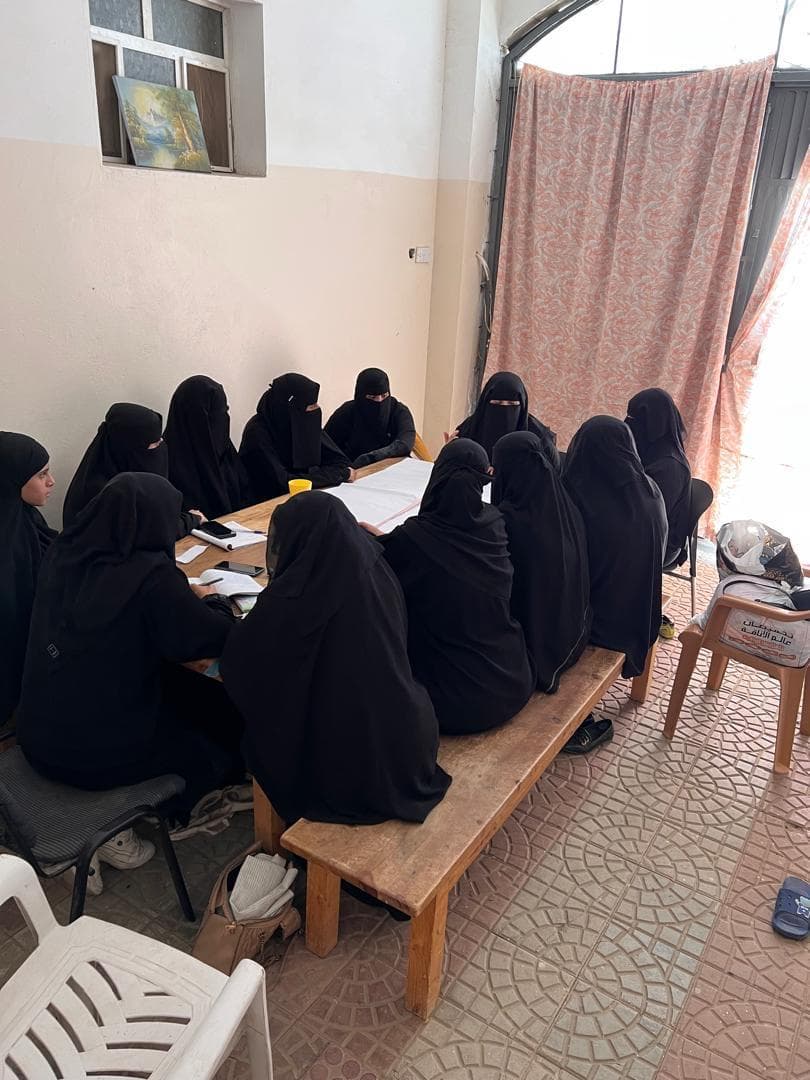
A former garage, with walls painted in beige and white, the heavy doors covered with light rose curtains.
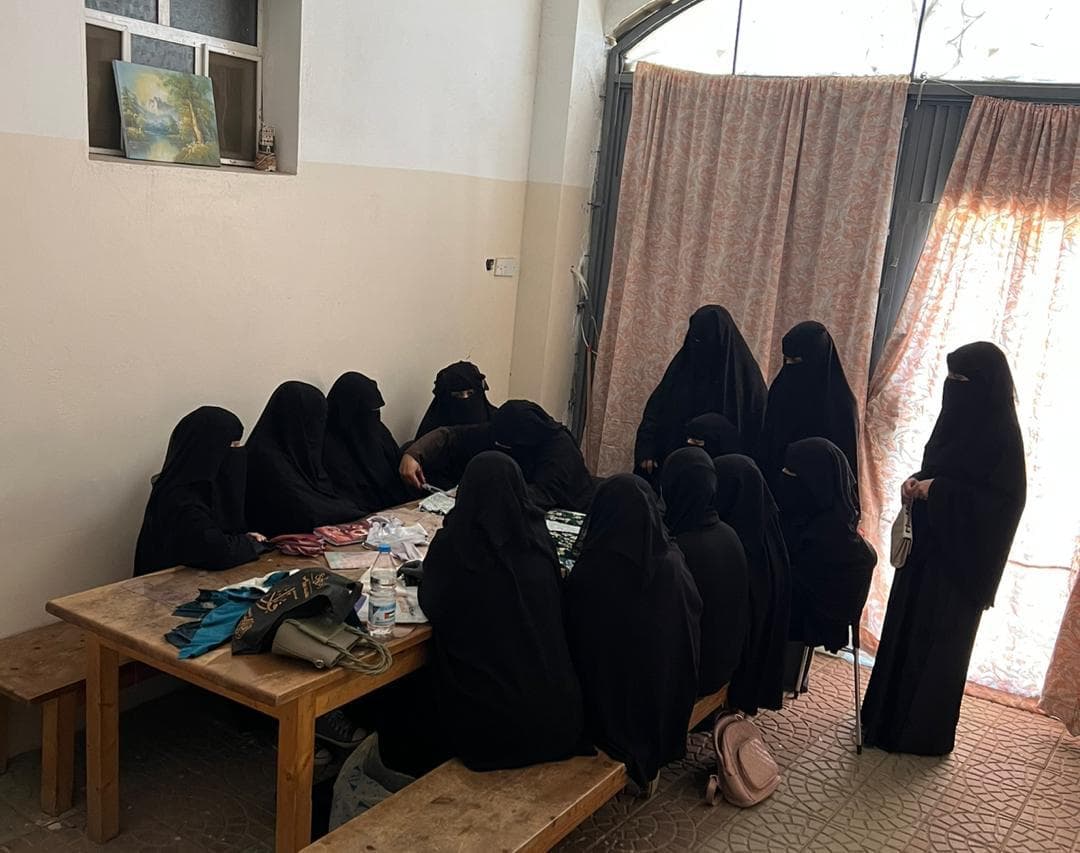
“The women take good care of each other after the last night’s bombs.”
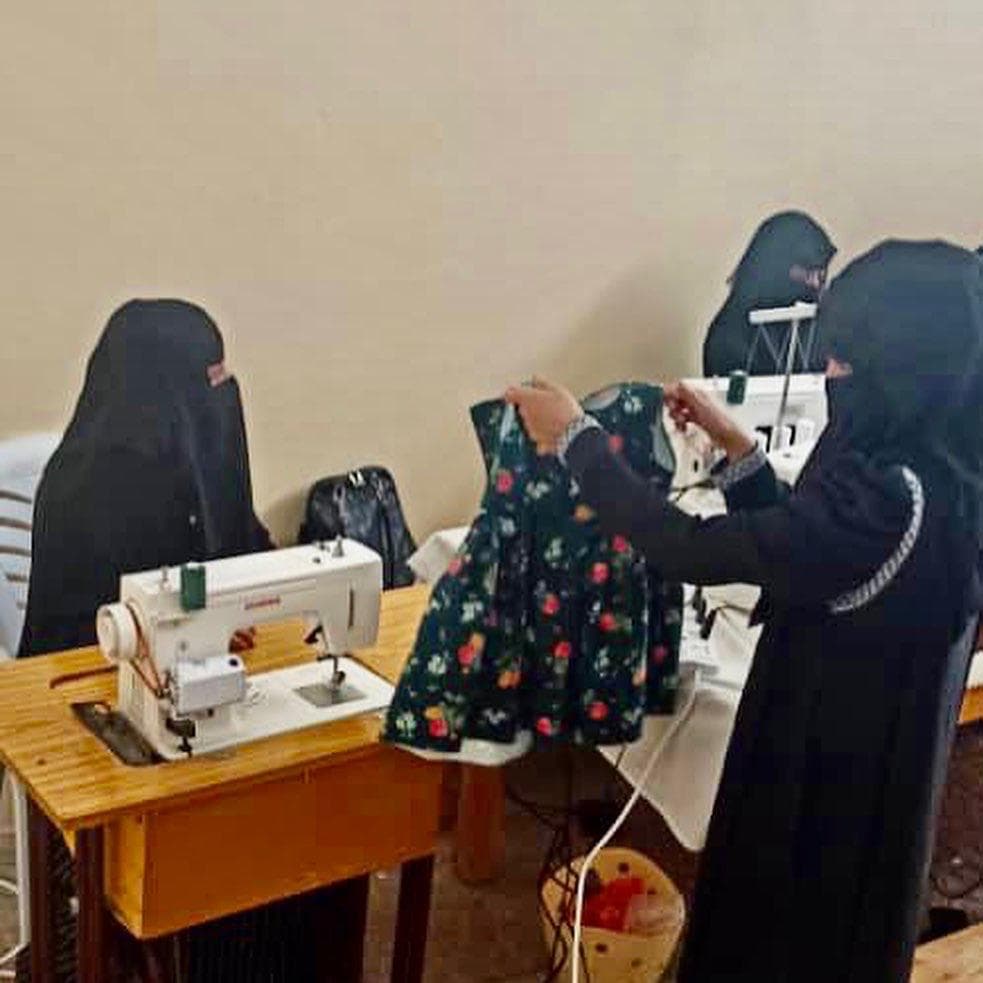
The project works solely through word of mouth. Students enhance their sewing skills or learn from scratch, design dresses for their children or for themselves, and with their work sometimes support women in their neighbourhood. In the last weeks, the classes have also become something like a safe space.
Inside the classesSoon there will be new dresses and new stories.
It’s like a stone you throw in the water that creates waves. Tiny ones at first, and as they move on they become bigger and bigger.
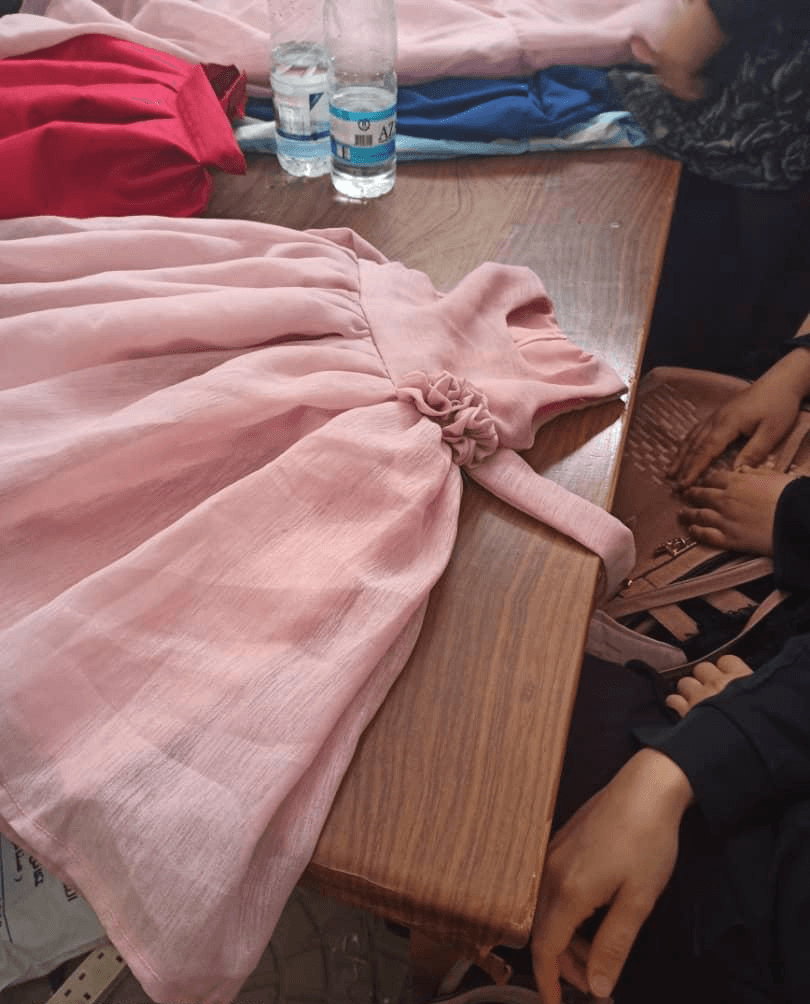
Before Eid, a woman who cleaned houses for a living had no money to buy new clothes for her daughter. Layan, Shyma’a’s daughter, remembered the collection of dresses the students had sewn.
“I gave some to the woman and her daughter. And you cannot imagine how happy they were. They cried and were so thankful.”
Four hours, two skills.
Sewing runs three mornings a week. The jewelry class is paused for now.
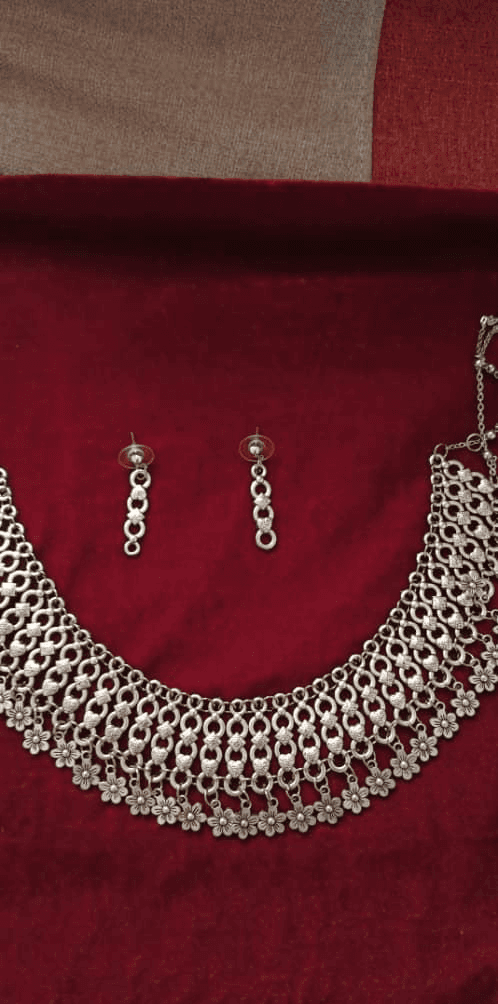
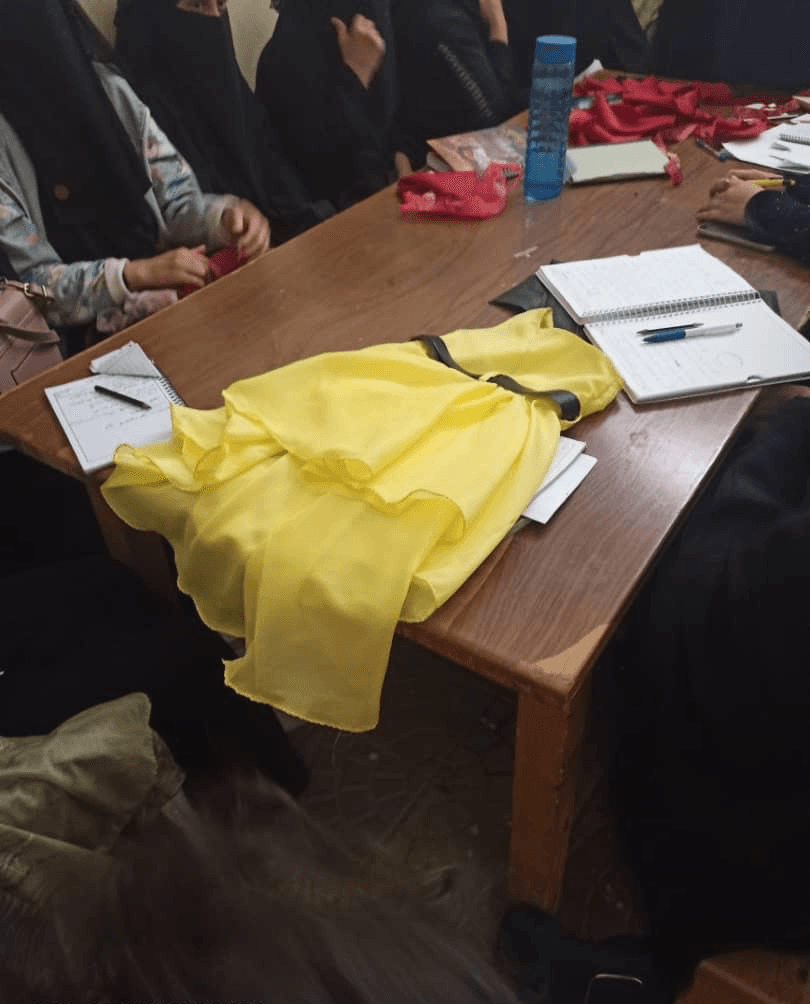
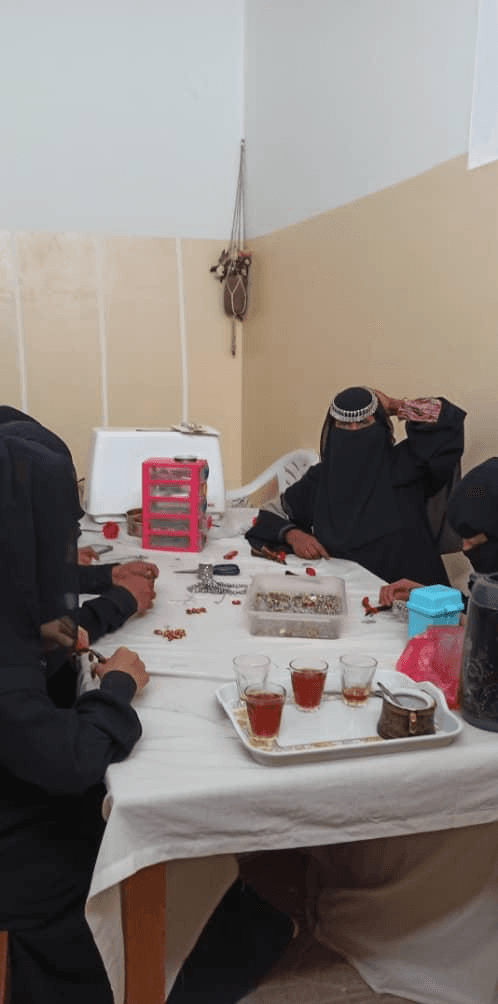
Made around the long wooden table.
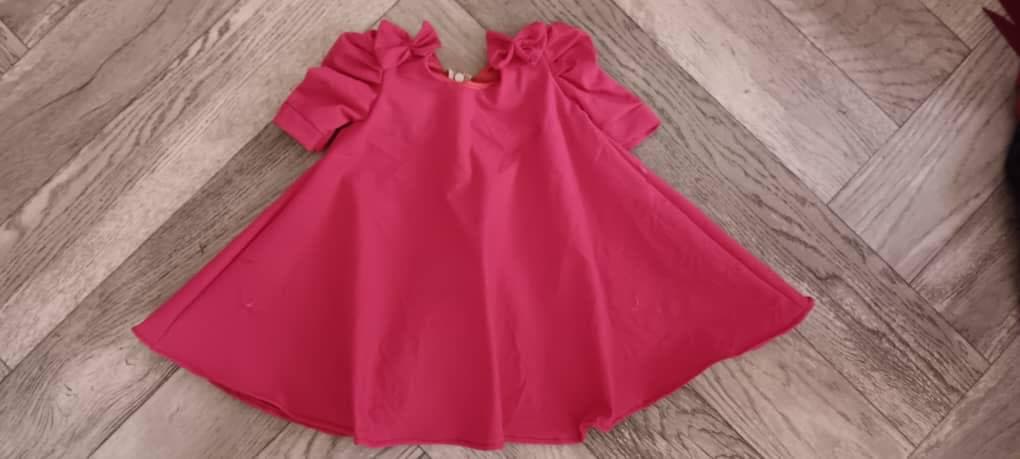
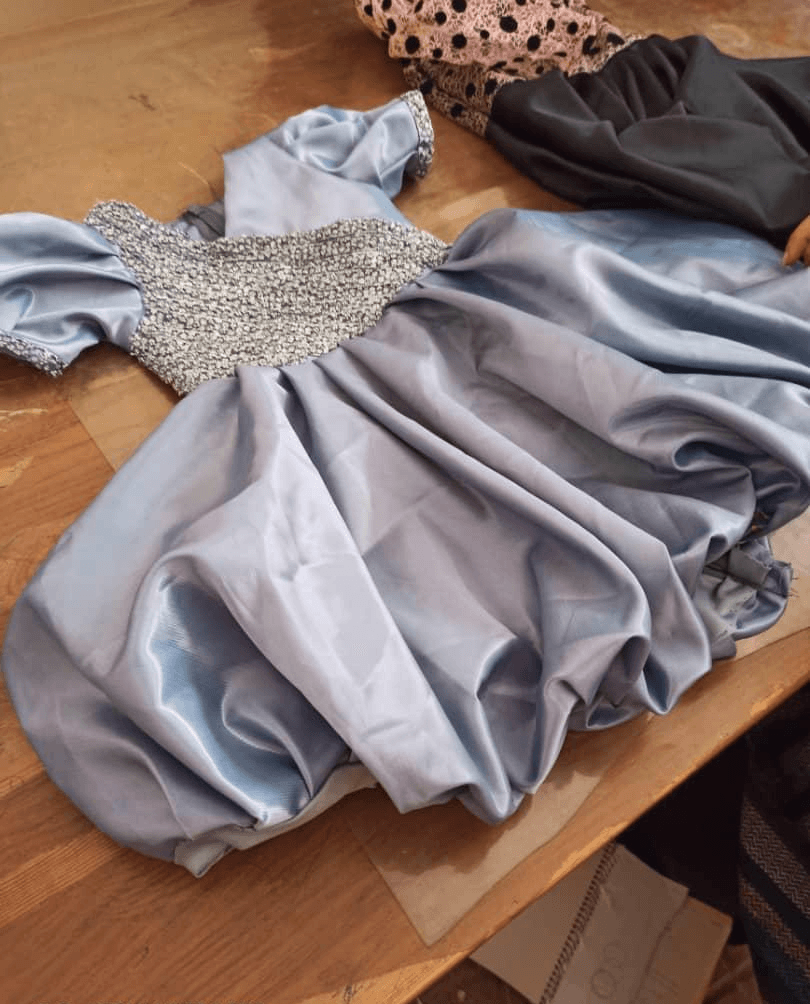
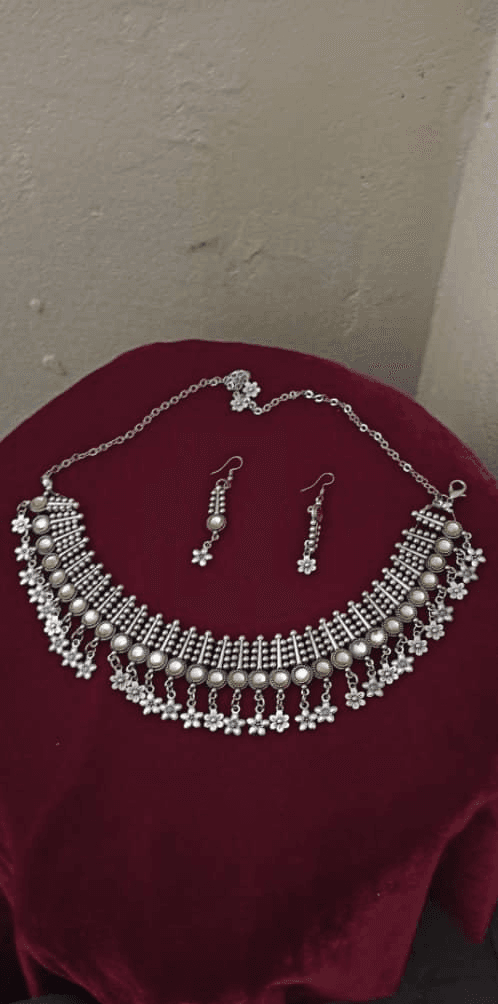
Children’s clothes, handbags, belts, bracelets, necklaces and earrings. The items could easily fill the display of a handicraft shop.
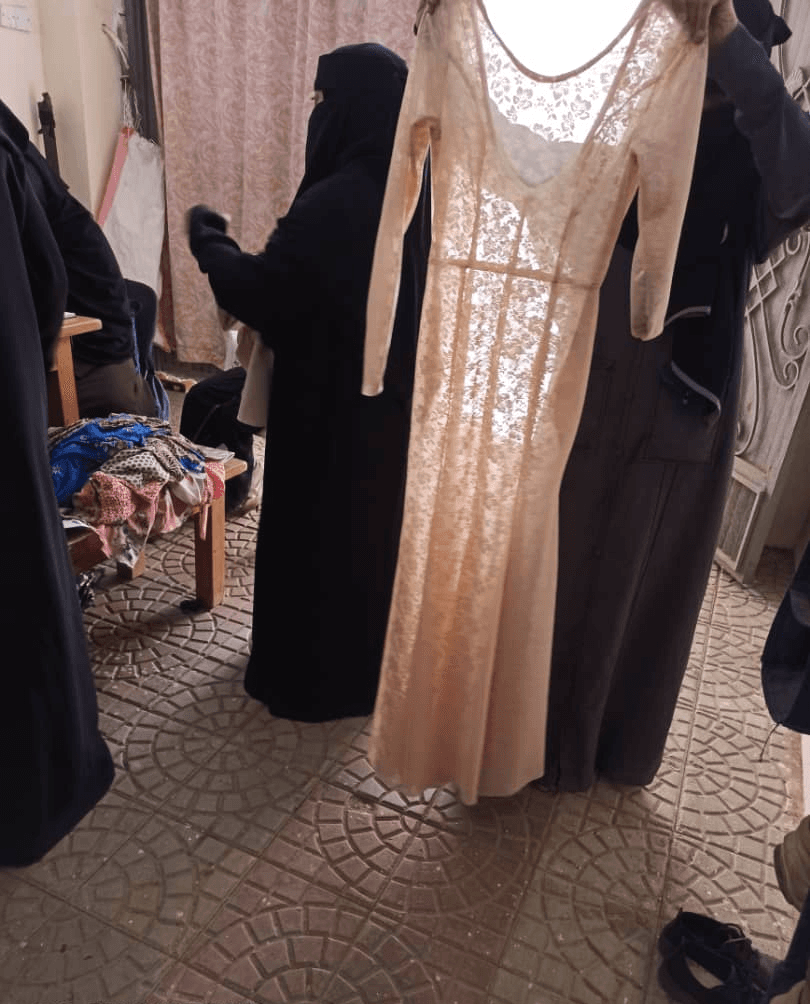
There wouldn’t be better hands.

Helene Aecherli
Founder
Shyma’a
Supervisor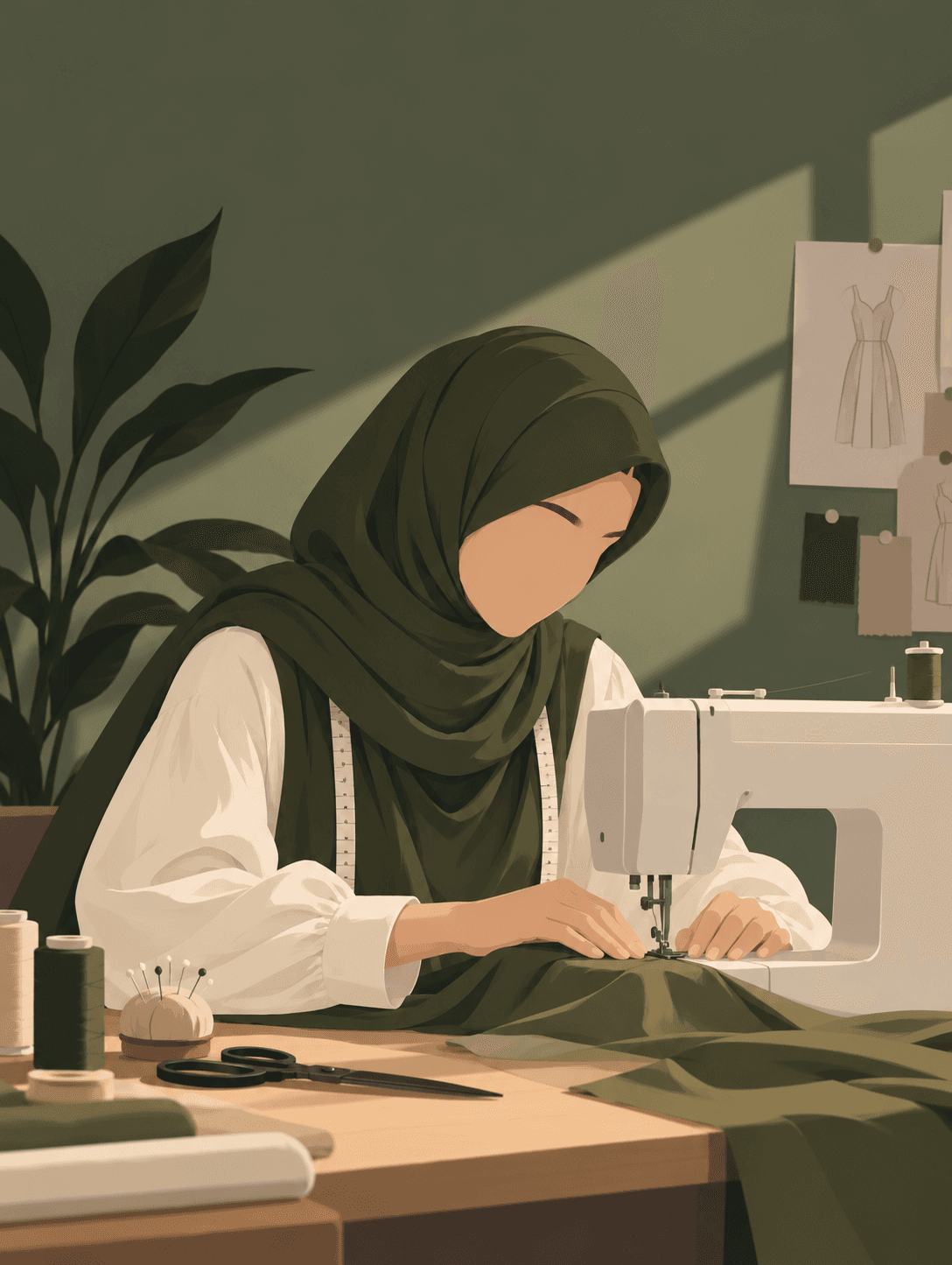
Halima
Teacher“One thousand miles start with a first step.”